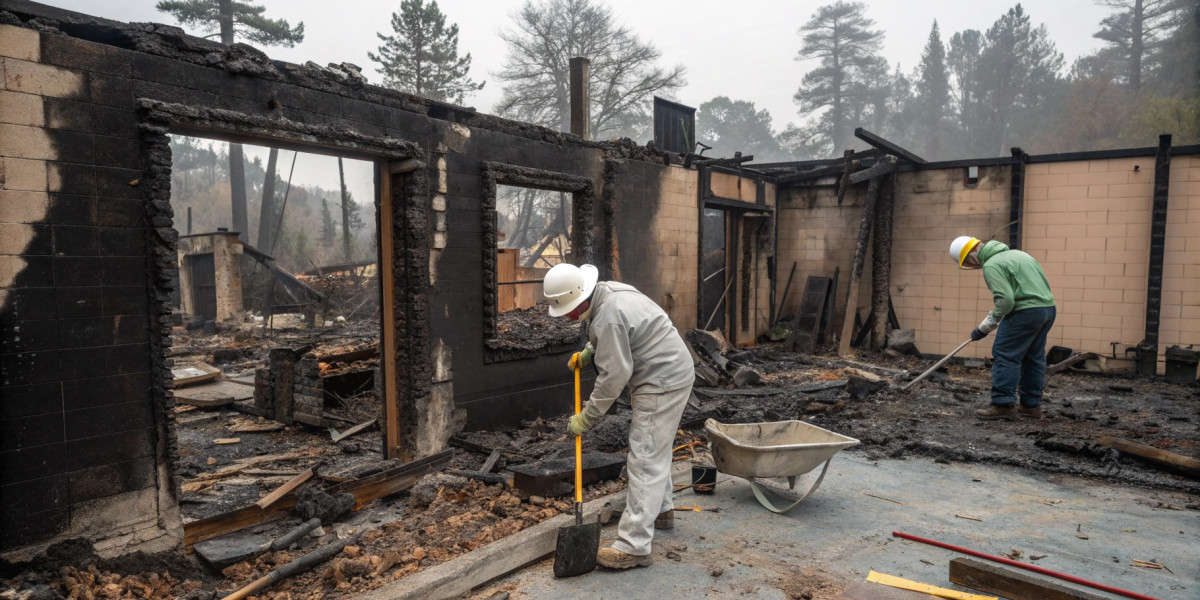

Fire damage repair specialists build detailed restoration plans to address smoke, soot, structural framing, and code compliance. They begin with a full inspection, then remove smoke odors, clean hazardous soot, and evaluate framing for heat-related weakening. Contractors repair or replace damaged structural components and ensure all rebuilding meets current safety codes. Proper documentation and insurance coordination help streamline the process and restore the property safely and completely.
-
Introduction
When a fire occurs, the visible flames are only part of the damage. What comes afterward smoke residue, soot contamination, weakened framing, and strict building codes can make restoration a complex process.
That’s why professional fire damage repair specialists don’t jump straight into rebuilding. Instead, they develop a detailed repair plan that ensures the property is safe, structurally sound, and compliant with all regulations.
In this blog, we’ll explain how fire restoration experts create a step-by-step repair strategy that addresses:
Smoke and odor damage
Soot contamination
Structural framing repairs
Local building code compliance
Let’s break it down in a simple and easy-to-follow way.
Understanding the Purpose of a Fire Damage Repair Plan
A fire damage repair plan is more than a construction checklist. It is a structured roadmap developed by a fire damage repair company to guide the full restoration process after a fire loss. The plan is designed to:
Restore the property safely
Remove toxic contaminants
Prevent long-term corrosion and odor issues
Repair structural components
Ensure the building meets updated safety codes
Every fire is different, so contractors tailor the plan based on the severity of damage, building type, and insurance requirements.
Step 1: Initial Fire Damage Inspection and Assessment
The repair planning process begins with a full property inspection.
Fire damage repair specialists assess:
Burn severity and heat exposure
Smoke travel patterns throughout the building
Soot accumulation levels
Water damage from firefighting efforts
Structural integrity of framing and load-bearing elements
Contractors often work with engineers, insurance adjusters, and inspectors during this phase.
Key Deliverables of the Assessment
Damage documentation
Safety risk identification
Restoration scope definition
This step forms the foundation of the repair plan.
Step 2: Addressing Smoke Damage in the Repair Plan
Smoke damage is one of the most widespread consequences of a fire. Smoke particles can infiltrate:
Walls
HVAC systems
Insulation
Furniture
Electrical components
Fire damage contractors build smoke remediation into the repair plan early.
Smoke Repair Plan Includes:
Air Quality Testing
Contractors may test indoor air for harmful particulates and toxins.
Smoke Odor Neutralization
They use specialized equipment such as:
HEPA air scrubbers
Ozone machines (when safe)
Thermal fogging systems
HVAC Smoke Cleaning
Smoke-contaminated ductwork is cleaned or replaced to prevent recirculation.
Smoke remediation is essential before reconstruction begins.
Step 3: Soot Removal and Surface Decontamination
Soot is a hazardous byproduct of combustion. It is acidic, toxic, and corrosive.
If not removed properly, soot can:
Permanently stain surfaces
Corrode metal fixtures
Damage electronics
Cause respiratory issues
Fire restoration contractors develop a soot cleanup protocol based on soot type.
Types of Soot Contractors Identify
Dry soot (wood/paper fires)
Oily soot (kitchen fires)
Protein residue (invisible but odorous)
Soot Removal Plan Often Includes:
Dry chemical sponging
Abrasive cleaning methods
Wet cleaning with alkaline solutions
Sealing surfaces to prevent odor return
Soot remediation is a critical health and safety step in the repair plan.
Step 4: Evaluating Structural Framing After Fire Exposure
Structural framing is one of the most important components of a fire damage repair plan.
Even if framing looks intact, high heat can weaken:
Wood studs
Roof trusses
Floor joists
Load-bearing beams
Contractors Inspect for:
Charring depth
Warping or twisting
Moisture saturation from suppression efforts
Loss of structural load capacity
Structural Repair Plan May Include:
Reinforcement
Sistering joists or adding steel supports.
Partial Framing Replacement
Removing compromised framing sections.
Full Structural Rebuild
In severe fires, entire framing systems may require replacement.
Licensed structural engineers may be involved for compliance and safety validation.
Step 5: Creating a Code-Compliant Reconstruction Strategy
Code compliance is one of the most overlooked aspects of fire restoration.
After a fire, repairs must meet current building codes not the codes in place when the structure was originally built.
Contractors Account for:
Fire-rated materials requirements
Updated electrical standards
Smoke alarm and sprinkler regulations
Energy efficiency codes
Structural safety updates
Common Code Upgrades Required After Fire Damage
New insulation standards
Modern wiring and breaker panels
Fire-resistant drywall installation
Egress and exit compliance improvements
Fire damage repair specialists coordinate with local building departments to ensure every repair passes inspection.
Step 6: Coordinating With Insurance and Documentation Requirements
A professional repair plan also includes insurance coordination.
Contractors provide:
Detailed scope of work
Itemized estimates
Photo documentation
Compliance reports
Material specifications
This helps homeowners receive proper coverage and speeds up claim approvals.
Step 7: Final Restoration Timeline and Execution Plan
Once smoke, soot, framing, and code requirements are addressed, contractors create a clear rebuild schedule.
A Typical Repair Timeline Includes:
Emergency board-up and stabilization
Smoke and soot remediation
Demolition of unsalvageable materials
Structural framing repair
Code-compliant reconstruction
Final inspection and clearance testing
This organized approach ensures no step is missed.
Final Thought
Fire restoration is a detailed process that goes far beyond repairing what is visibly burned. A successful recovery depends on addressing hidden smoke residue, corrosive soot, compromised structural framing, and strict building code requirements. Fire damage repair contractors play a critical role in creating a step-by-step repair plan that ensures every part of the property is cleaned, reinforced, and rebuilt safely. With the right expertise and compliance-focused approach, homeowners can move forward with confidence knowing their space is fully restored and protected for the future.